
"Old Tree"
2000 article(s) found

What is the difference of Darjeeling Ancient Tree Black Tea? flavor and appearance characteristics of Darjeeling AV2 tea varieties
There is a great difference in the smell between Pu'er and black tea, because the flavor created by the varieties and techniques of ancient tea, old tea and big tea advertised by Pu'er will be relatively calm, heavy, wood-based and full-bodied, and sometimes with juniper, ginseng, plum, jujube, medicinal and soil flavor after transformation. Pu'er raw tea, that is, big-leaf suntan tea, will tend to.

Introduction to the cultivation of Xinzhai Coffee in Baoshan. Is it good?-how much is Xinzhai Coffee?
Professional coffee knowledge exchange more coffee bean information please follow the coffee workshop (Wechat official account cafe_style) this is true, in Baoshan Xinzhai Coffee Farm, drink a cup of coffee without bitterness. Of course, coffee is not bitter originally, but for the general public in China who do not know it, especially for people like me who are allergic to coffee, the general impression of it is really bitter.

Description of Yunnan Coffee Flavor and Taste in China introduction to the characteristics of authentic Yunnan old tree iron pickup coffee beans
Yunnan coffee in China is a product of the tropics. You may not believe that the best coffee producing area in the world is in Yunnan, China.

The establishment of a coffee garden
1. The environmental conditions of land selection, planning and reclamation are closely related to the growth and development of coffee, which should be determined according to the growth habits and environmental requirements of coffee. Try to avoid choosing lowlands where cold air is easy to accumulate and condense frost; coffee roots are good, so choose well-drained and loose soil; coffee needs a calm wind environment, so in areas where there is no primary forest, consideration should be given to planning windbreaks.

Katim coffee beans with stable yield Geographical location Climate Altitude profile
The high-yielding catimor is a good choice, but if you want to find Yunnan specialty coffee, then the old variety Tiepi card will become the first because of its congenital excellent genes.

A brief introduction to the flavor, taste and aroma characteristics of Katim's boutique coffee beans.
Catimor: in 1959, the Portuguese mixed Brazilian Kaddura and Timo to develop a disease-resistant Katim / Katimo, which is now an important variety of commercial beans. Yunnan small grain coffee is a 3-year-old 4-year-old fruiting tree. Coffee is a short-day plant. Coffee has the characteristics of multiple flowering and concentrated florescence. Small seed coffee florescence in Yunnan from February to July

Introduction to the method of grinding and calibrating the flavor description of Yunnan Katim coffee beans
Yunnan Katim Coffee Bean Flavor description, Grinding and Calibration method Colombia is the biggest harvest of this new variety of Katim, and the improved Katim, named after Colombia Katim and Kaddura, are their two main varieties, with a proportion of about 6:4. These are my brothers when I attended the World Expo in 2010 as a Chinese coffee consultant in Costa Rica.

Brief introduction of Katim Coffee Bean characteristics, Flavor and taste varieties of Coffee from Yunnan, China
Colombia is the biggest harvest of the new variety of Katim, and the improved Katim's national names Colombia Katim and Kaddura are their two main varieties, with a proportion of about 6:4. These were told by my Colombian colleagues during the 2010 World Expo as a Chinese coffee consultant in Costa Rica. So those who flip through the side and look at the Supermo bags.

Description of the overall bitter taste of iron pickup coffee introduction to the characteristics of the manor producing area
Tracing back to its roots, typica originated from Ethiopia, the ancient origin of coffee, and is the earliest original species of coffee. Bourbon is a variety of typica, both of which have rich aroma and excellent taste performance, and belong to very high quality varieties in Arabica. It is said that the coffee tree species that was first introduced into Zhukula in Yunnan is typica. Baoshan area was opened in the 1950s.

The Variety treatment of Katim Coffee Bean name Origin of domestic Coffee Farm in Yunnan, China
Katim Coffee Bean introduces the field management measures, which are suitable for the management of general small-grain coffee. Propagation method: adopt seed propagation, select 5-year-old fine mother tree, harvest fully mature, fruit shape is normal, full, size is basically the same, with two-seed fruit as seed, using sand bed to promote germination, plastic bag seedling. Selection of suitable forest land the annual average temperature is 1921 ℃, the product of 10 ℃ per year

A basic introduction to Columbia Coffee Manor: planting situation, Variety characteristics and Flavor Manor Calendar
Colombia Huilan Lerusa Manor Guide: Manor: Colombia Huilan Lerusa Manor Tree species: old Bobang 60%, Tibica 40% altitude: 1550 meters taste: sweet pulp, mellow, depth, excellent sense of balance the manor does not use a high-speed and convenient dryer, but uses the traditional SUN DRY drying method, basic information origin: Colombia Huilan Lerusa Manor

Matters needing attention in planting coffee trees what is the introduction of Indonesian coffee
Note: (1) Coffee is a tree, so during the growing period, the following leaves will gradually become old and yellowed, which is a normal phenomenon of plant growth, do not panic, pay attention to timely cleaning of old leaves and yellow leaves; (2) it takes three years for coffee to blossom. The flower has a jasmine-like aroma, which is lighter than jasmine, and has the bitter taste of coffee after taste. The flowering period is from February to May and blossoms continuously. Post-anthesis knot
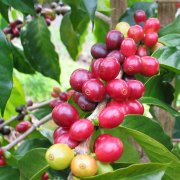
Chinese Coffee the Legend of Coffee in Zhukula Village, Dali, Yunnan Province
When it comes to the history of Chinese coffee, we have to mention Yunnan Dali Zhukula Coffee, which plays a vital role in the history of Chinese coffee. The ancient coffee forest in Zhukula Village is a unique variety of small-grain coffee in Yunnan. It is very rare and of excellent quality. It can be called a living fossil of Chinese coffee. In today's program, we will explore the century-old coffee legend of Zhukula Village. Zhu

Green Island Serenade Cafe 90 years old house renovation
Green Island Serenade Cafe 90 years old house transformation early summer, under the shade of trees, is a mottled broken light and shadow. Pushing open the old Japanese house behind the tree, the rich aroma of coffee wafted out. This is a wooden hut with a history of more than 90 years. It was originally owned by Sasaki Hachijiro, a photographer during the Japanese rule period. Later, it became a police unit dormitory in Taipei. Now, it is Green Island Small.

The Development of Coffee in China the Biography of Coffee in Zhukula Village, Yunnan Province
When it comes to the history of Chinese coffee, we have to mention Yunnan Dali Zhukula Coffee, which plays a vital role in the history of Chinese coffee. The ancient coffee forest in Zhukula Village is a unique variety of small-grain coffee in Yunnan. It is very rare and of excellent quality. It can be called a living fossil of Chinese coffee. We went to explore the century-old coffee legend of Zhukula village. Zhu Kula, located in Yunnan Province

Indonesian Coffee Tree varieties how many percent of the people in Indonesia grow coffee trees
Indonesian coffee has a strong flavor, mellow taste, slightly syrup flavor and excellent acidity. Its two main export markets are Germany and Japan, which reflects the excellent quality of the coffee. What attracts consumers is the unique quality of its Arabica coffee beans. You can add milk or cream to high-quality Indonesian coffee without worrying about affecting its taste. India

Description of characteristic taste and flavor of Yunnan coffee beans introduction of varieties produced by grinding scale
Yunnan coffee bean characteristic taste flavor description grinding scale production area variety introduction one is about baking, the other is completely advertising Yunnan coffee. Let's start with Yunnan: almost all the coffee grown in Yunnan is Arabica, also known as small seed, and there are many subspecies under the small seed, most of which are Katim, the oldest is tin card, and there are some new varieties such as S288.

Cultivation techniques of small-grain coffee: multi-dry shaping and cultivation
Multi-dry shaping is a method that uses the first-order branch as the main fruiting branch. The purpose of plastic surgery is to cultivate multiple trunks and grow a large number of robust primary branches, and the multi-trunk trees will not be topped. As a result, when the yield decreases after 3-5 years, the new trunk will be replaced. ① culture multi-stem method oblique planting method: when planting, the seedlings are oblique, generally at an angle of 30-60 degrees with the ground. Oblique planting can be suppressed

A brief introduction to the flavor, taste and aroma characteristics of Katim boutique coffee beans suitable for deep baking
Coffee is a semi-shaded tree species, it is recommended to establish a moderate shade degree of 3040%. In the site environment of growing coffee in our province, it is generally difficult to solve the problem of water conservancy and irrigation. the water season is in the dry season, and it is also the season to compete with other crops for water. It is not easy to rely on irrigation to meet the water demand in the coffee field. It is necessary to loosen the soil in time after the end of the rainy season and adopt dead objects on the ground.

Arabica coffee cultivation techniques Multi-stem shaping and cultivation of coffee trees
Multi-stem integer Multi-stem integer is an integer method that uses the first branch as the main result branch. The purpose of integer is to cultivate multiple trunks and grow a large number of robust first-order branches. Multi-trunk trees do not pick the top. As a result, when the yield decreases after 3 to 5 years, new trunks are replaced.① Cultivation of multi-stem method oblique planting method: When planting, the seedlings are obliquely planted, generally at an angle of 30~60 degrees with the ground. oblique planting can inhibit